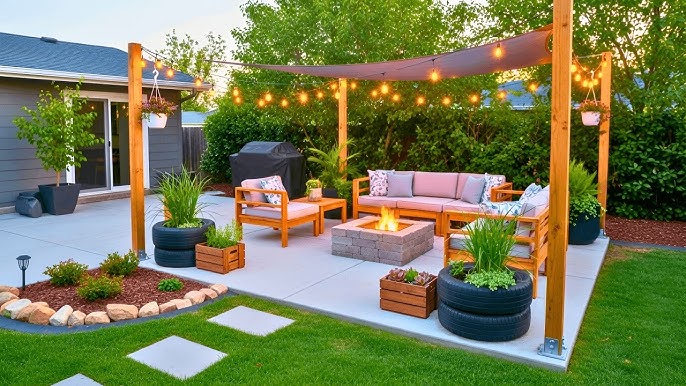
Outdoor Living Space Ideas for Massachusetts Homeowners
What are the best outdoor living space ideas for Massachusetts homeowners? The most effective outdoor living designs in Central Massachusetts are a composite deck with defined zones ($15,000–$45,000), a paver patio with a built-in fire pit ($8,000–$22,000), a combined deck-and-patio for sloped properties ($25,000–$60,000+), and a covered porch for year-round usability ($20,000–$45,000+). Gas fire pits are the practical choice in Massachusetts — exempt from open burning restrictions and usable year-round. Most projects take 8–14 weeks. Horizon Deck and Patio designs and builds outdoor living spaces throughout Central Massachusetts.
Outdoor Living Space Ideas for Massachusetts Homeowners
Massachusetts gives you four genuinely beautiful seasons and a climate that — with the right outdoor space — can be enjoyed comfortably from late April through November. The homeowners who get the most from their property are not the ones with the biggest yards. They are the ones who designed their outdoor spaces intentionally, with a clear vision of how they want to live outside.
At Horizon Deck and Patio, we design and build outdoor living spaces for homeowners throughout Lunenburg, Northborough, Westborough, Southborough, and Hopkinton. This guide covers the outdoor living ideas that work best in Central Massachusetts — the designs, features, and material choices that perform in New England's climate and deliver the kind of outdoor experience that makes the investment worthwhile.
Start With the Right Question: How Do You Actually Want to Use the Space?
The most common mistake homeowners make when planning an outdoor living project is starting with a design they saw online rather than starting with how they actually live. A stunning deck from a Pinterest board means nothing if it does not fit your yard, your home, or the way your family spends time outside.
Before thinking about materials or features, answer these questions honestly. Do you primarily want to dine outside, or do you want a relaxed lounge space? Do you entertain large groups or mostly use the space as a family? Is a fire pit something you would actually use or does it sound better in theory? Do you want to be able to step outside in light rain, or does weather always drive you inside? How important is privacy from neighboring properties?
These answers shape every design decision that follows. Tyler Grams at Horizon Deck and Patio walks through these questions at every free consultation — because the best outdoor living space is the one that matches how you actually live, not the one that looks the most impressive in a photograph.
Outdoor Living Idea 1: The Composite Deck with Defined Zones
The most popular outdoor living project we build across Central Massachusetts is a custom composite deck with distinct defined zones — a dining area near the back door, a lounge or seating area further out, and a transition space that connects the two. This layout works on decks as small as 16×24 feet and scales naturally to larger multi-level designs.
Why defined zones work
A deck without defined zones becomes a surface where furniture gets arranged randomly and nothing feels intentional. A deck designed with zones from the start has a dining area sized correctly for a six-person table, a lounge area sized for a sectional or four-person seating group, and clear visual separation between the two — either through a change in level, a railing section, or simply the furniture arrangement the design was built around.
Material recommendation for this design
Composite decking — Trex or TimberTech — is the right material for a multi-zone deck in Massachusetts. The low maintenance profile matters more on a larger surface, and the wide color and finish range available in composite products gives you the design flexibility to complement your home's exterior while eliminating the annual maintenance burden of a wood surface.
→ Learn more about composite decking installation
→ Trex vs. TimberTech: which is right for your Massachusetts home?
Outdoor Living Idea 2: The Paver Patio with Built-In Fire Pit
If a single outdoor living feature defines Central Massachusetts backyards, it is the paver patio with a built-in fire pit. This combination extends the outdoor season more effectively than any other single investment, creates a natural gathering space for family and guests, and looks genuinely beautiful in the wooded, natural character that defines many properties across Lunenburg, Northborough, Southborough, and Hopkinton.
The design that works
The most successful fire pit patio designs follow a consistent layout logic. A primary patio surface — typically 400–600 square feet of concrete pavers or natural stone — establishes the outdoor room. A built-in fire pit sits at the far end or center of the patio, set at a height and position that creates a natural seating radius. A low natural stone or paver seating wall — 18–20 inches tall — rings the fire pit area at a distance of 6–8 feet, establishing the seating zone without requiring separate chairs. Path lighting connects the patio to the house and defines the space at night.
Wood-burning vs. gas fire pit
For Massachusetts homeowners, gas fire pits have become the more popular choice — and the reasons are practical. Gas fire pits are not subject to Massachusetts open burning restrictions, which can prohibit wood-burning during dry conditions in summer and fall. They require no wood storage, no smoke management, and no ash cleanup. They turn on and off instantly. And they can be used year-round in a way that wood-burning units cannot during ban periods. The higher upfront cost of a gas fire pit is offset within a few seasons by the convenience and the extended usability.
→ Learn more about fire pit installation in Massachusetts
Outdoor Living Idea 3: The Combined Deck and Patio
For Massachusetts properties with a grade change from the back door to the yard — which describes a significant percentage of homes in Hopkinton, Lunenburg, and the hillier parts of Northborough and Southborough — a combined deck and patio is often the most functional and visually cohesive solution available.
How the combined layout works
The deck attaches to the house at door height, bridging the grade change and creating the primary outdoor living surface at the same level as the kitchen or living room. Stairs descend from the deck to a paver patio at grade, which sits lower in the yard and serves as the secondary zone — ideally positioned for a fire pit seating area, a garden-adjacent lounge space, or an open lawn connection.
This two-zone layout solves the grade problem elegantly while also creating something more valuable than either feature alone: distinct outdoor rooms with different characters and different uses. The deck is for dining, entertaining, and indoor-outdoor flow. The patio is for the fire, the evening wind-down, and the more relaxed end of the outdoor day.
Why this design performs best in New England
New England outdoor living is seasonal and layered. A combined deck-and-patio layout gives you the right outdoor space for every part of the day and every point in the season. Breakfast on the deck in early spring sun. Dinner on the deck through summer. Fire pit on the patio from September through November. The design makes the most of every week the Massachusetts climate gives you outdoors.
→ Deck vs. patio: which is better for a Massachusetts backyard?
Outdoor Living Idea 4: The Covered Porch Addition
A small covered porch is one of the most underutilized outdoor living upgrades available to Massachusetts homeowners — and one that consistently delivers the highest ratio of day-to-day usability to project cost of any outdoor addition we build.
Why covered porches work in New England
Massachusetts outdoor living is interrupted constantly by weather — afternoon thunderstorms in summer, unpredictable rain in spring and fall, and the general uncertainty that defines New England's climate. A covered porch eliminates that interruption. You can sit outside in light rain. You can keep the outdoor furniture out in conditions that would otherwise drive you inside. You can use the space comfortably in the shoulder seasons — May, September, October — when open decks and patios are borderline.
The result is a measurable increase in how much you actually use your outdoor space. Homeowners who add a covered porch consistently report that it becomes the most-used part of the house during the warmer months — because it is the one outdoor space that performs regardless of the weather.
Design considerations for covered porches in Massachusetts
Covered porches in Massachusetts must be designed for snow load — Central Massachusetts falls in a zone requiring roofs to handle significant ground snow load. This is not a DIY project and is not something to cut corners on. A properly engineered covered porch with a well-designed roofline is one of the most architecturally satisfying additions to a home. A poorly built one is a liability.
At Horizon Deck and Patio, we design and build covered porches as part of complete outdoor living projects. We handle all permitting, including structural review where required, and build covered porches to the same standard as everything else we build.
→ Deck and patio design services
Outdoor Living Idea 5: The Deck Remodel and Upgrade
Not every outdoor living improvement starts from scratch. For Massachusetts homeowners with an existing deck that has aged out of its best years — worn boards, outdated railing, faded appearance — a targeted remodel can deliver a result that looks and performs like a new deck at a fraction of the replacement cost.
The wood-to-composite conversion
The most transformative and popular deck remodel we complete across Central Massachusetts is replacing worn pressure-treated wood boards with Trex or TimberTech composite decking. If the existing framing is structurally sound, composite boards can be installed directly over it. The result is a deck that looks completely new, requires essentially no ongoing maintenance, and carries a 25-year warranty on the new surface material.
For homeowners who have been living with a tired wood deck and periodically putting off the maintenance, a composite conversion is often the tipping point that makes the outdoor space enjoyable again — and extends its useful life by another 25–30 years without a full rebuild.
Railing upgrades
Railing has an outsized visual impact on how a deck reads from inside the house and from the yard. Replacing dated wood railing with cable railing, aluminum, or composite railing systems modernizes the appearance of an existing deck more dramatically than almost any other single change. Modern railing systems also open up views from the deck surface that wood balusters close off, which changes the feel of the space significantly.
→ Deck and patio remodeling services
Outdoor Living Idea 6: Natural Stone and Paver Pathways
One of the most underappreciated elements of a complete outdoor living space is the pathway system that connects the different zones. A well-designed pathway — stepping stones from the back door to the patio, a defined edge between the patio surface and the lawn, or a bluestone path connecting the deck stairs to the fire pit area — elevates the finished space from a collection of features to a cohesive outdoor environment.
Natural stone pathways using Massachusetts bluestone, granite stepping stones, or tumbled concrete pavers are low-maintenance, freeze-thaw resistant, and visually integrate the different elements of the outdoor space. When we design complete outdoor living projects for homeowners across Central Massachusetts, pathway and edge detailing is always part of the plan — because it is the detail that makes everything else look intentional.
Matching Your Outdoor Living Space to Your Home's Character
Central Massachusetts homes range from colonial and cape-style homes in established neighborhoods to newer construction with more contemporary proportions. The outdoor living space should complement the home's character rather than fight against it.
Traditional and colonial homes
Traditional and colonial-style homes in Northborough, Southborough, and Westborough tend to suit natural materials — wood tones in composite decking, natural stone or tumbled paver surfaces, simple railing profiles, and plantings that soften the edges of the structure. A multi-level deck with clean lines and a connected stone patio reads as a natural extension of these homes rather than an addition that was built separately from the main structure.
Newer construction
Newer construction in Westborough and Hopkinton often has a more open lot layout and contemporary proportions that suit larger single-level decks, wider composite plank formats, cable or horizontal-rod railing systems, and geometric patio designs with clean square or rectangular layouts. Gas fire pit systems integrate particularly naturally into contemporary outdoor living designs.
Wooded and rural properties
Properties in Lunenburg, Hopkinton, and the rural edges of Southborough and Northborough with significant tree coverage and natural screening are ideal for natural stone — fieldstone fire pits, granite stepping stones, bluestone patios — that connects the outdoor space visually to the surrounding landscape. These properties often benefit from the combined deck-and-patio approach because the grade changes and wooded character create natural opportunities for distinct outdoor zones at different elevations.
How Much Do Outdoor Living Projects Cost in Massachusetts?
Cost ranges vary widely depending on the type of project, materials selected, and site conditions. Here are realistic ranges for the most common outdoor living projects we build across Central Massachusetts:
Custom composite deck installation: $15,000–$45,000 depending on size, product line, and design complexity. Paver patio installation: $8,000–$22,000 depending on square footage and material selection. Fire pit installation as part of a patio project: $1,500–$8,000+ depending on type and materials. Combined deck and patio project: $25,000–$60,000+ depending on the scope of both elements. Covered porch addition: $20,000–$45,000+ depending on size and structural complexity. Deck remodel or composite conversion: $6,000–$25,000 depending on scope and existing structure condition.
Every Horizon Deck and Patio estimate is free, written, and itemized. We visit your property, assess the site, listen to your vision, and give you a clear project cost before any commitment is made.
Frequently Asked Questions: Outdoor Living in Massachusetts
What outdoor living features add the most value to a Massachusetts home?
In Central Massachusetts's real estate market, the features that consistently generate the strongest buyer response and highest resale return are: composite decks over wood, fire pit seating areas, covered porches, and complete outdoor living designs that combine multiple elements into a cohesive space. A combined deck-and-patio layout with a built-in fire pit is the single most impactful outdoor living investment available for most properties in the $500,000–$900,000 price range.
What is the best outdoor living design for a Massachusetts property with a sloped yard?
A combined deck-and-patio layout is almost always the best solution for sloped Massachusetts properties. The deck bridges the grade change from the back door, creating a primary outdoor living surface at door height. The patio sits at grade lower in the yard, creating a secondary zone that is ideal for a fire pit and seating area. This approach eliminates the need for expensive excavation or retaining wall work and creates a more functional and interesting outdoor space than either feature alone.
How do I extend my outdoor living season in Massachusetts?
The two most effective investments for extending your outdoor season in Massachusetts are a covered porch — which eliminates weather as a barrier to using the space in spring, summer, and fall — and a fire pit, which makes the space comfortable and inviting from early spring through late November. A homeowner with both a covered porch and a fire pit seating area can realistically use their outdoor space seven to eight months of the year in Central Massachusetts.
How long does it take to design and build an outdoor living space in Massachusetts?
From initial consultation to project completion, most outdoor living projects in Central Massachusetts take 8–14 weeks. This includes 1–2 weeks for design development, 3–6 weeks for permit review, and 1–3 weeks for construction depending on project scope. The best time to start the conversation is late winter or early spring — February through April — to ensure your space is ready for the outdoor season.
Ready to Design Your Outdoor Living Space?
At Horizon Deck and Patio, we design and build custom outdoor living spaces for homeowners throughout Lunenburg, Northborough, Westborough, Southborough, and Hopkinton, MA. Every project starts with a free consultation at your property — no obligation, no pressure, just an honest conversation about what is possible for your space and your budget.
→ Deck and Patio Design Services
→ Fire Pit Installation in Massachusetts
→ Deck vs. Patio: Which Is Better for a Massachusetts Backyard?