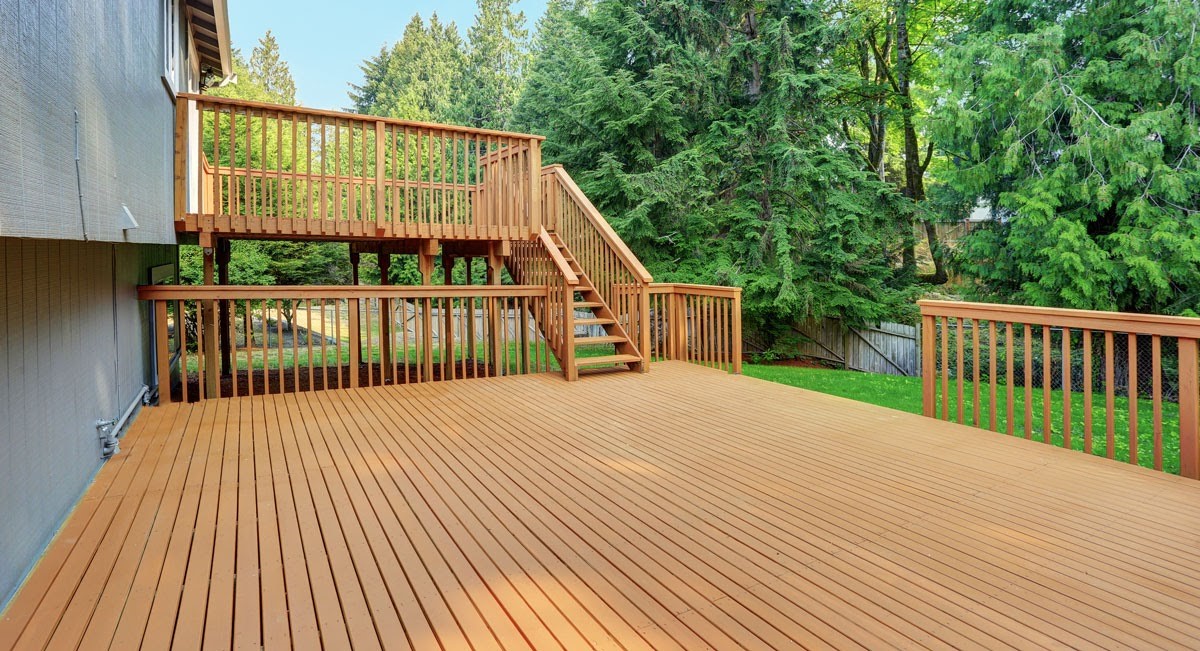
Does Adding a Deck Increase Home Value in Massachusetts?
Does adding a deck increase home value in Massachusetts? Yes. A well-built composite deck on a Central Massachusetts home in the $500,000–$900,000 range typically adds $15,000–$30,000 in resale value. Composite decks recoup 60–75% of project cost at resale in New England — higher than pressure-treated wood — and eliminate the maintenance liability buyers factor into offers on wood structures. Unpermitted decks actively hurt resale value by creating a disclosure liability at closing. Every deck Horizon Deck and Patio builds is fully permitted and inspected.
Does Adding a Deck Increase Home Value in Massachusetts?
It is one of the first questions homeowners ask when they start thinking seriously about building a deck: is this actually worth the investment, or am I spending $20,000–$35,000 on something that only benefits me while I live here?
The honest answer is that a well-built deck does increase home value in Massachusetts — but the amount depends on what you build, what material you use, and how it compares to what buyers expect in your specific market. A composite deck on a home in Northborough or Westborough lands differently than the same deck on a property in a lower price range. Material quality matters. Design matters. And the difference between a deck that adds value and one that merely adds square footage comes down to how it was built.
Tyler Grams at Horizon Deck and Patio has built custom decks throughout Lunenburg, Northborough, Southborough, Westborough, and Hopkinton. This guide breaks down what the data actually says about deck ROI, what Massachusetts buyers specifically look for, and what decisions you can make now that maximize the value a deck adds to your home.
What the Data Says About Deck Return on Investment
Remodeling Magazine's annual Cost vs. Value report is the most widely cited source for home improvement ROI data in the United States. The report tracks the average cost of common remodeling projects against the average value they add at resale — broken down by region. For the New England market, the data consistently shows composite deck additions recouping a strong percentage of project cost at resale.
For the New England region, composite deck additions have consistently recouped in the range of 60–75% of project cost at resale in recent reporting periods. A $25,000 composite deck addition, in other words, adds roughly $15,000–$18,750 to the appraised or perceived value of the home. Wood deck additions recoup a slightly lower percentage — typically in the 55–65% range — due to the ongoing maintenance liability buyers factor into their offers.
These are averages across a wide range of markets. In Central Massachusetts — where home values in Northborough, Westborough, and Southborough consistently sit in the $500,000–$900,000 range — well-executed composite deck additions frequently perform at or above the upper end of those ranges. In higher price band markets, buyers have more money to spend and more discernment about what they are spending it on — which means a quality composite deck reads as a genuine upgrade rather than a budget addition.
Why Massachusetts Buyers Value Decks
Outdoor living space is a genuine purchase driver in New England
Massachusetts homebuyers actively look for usable outdoor living space and the reason is directly tied to the climate. New England has a compressed outdoor season. Summers are beautiful but short. Homeowners who have invested in a quality outdoor space get dramatically more use out of it than homeowners with an unimproved backyard, and buyers know this. A well-designed deck with a clear connection to the house interior reads as meaningful additional living space and not just an exterior feature.
Real estate agents in the Northborough, Westborough, and Southborough markets consistently report that homes with quality outdoor living features — composite decks, paver patios, fire pit areas — photograph better, attract more showings, and generate stronger competing interest than comparable homes without them. In a market where buyer competition is real, that translates directly to sale price.
Composite decking signals quality maintenance to buyers
One of the underappreciated ways a composite deck adds value is what it signals about the overall maintenance profile of the home. A buyer walking onto a Trex or TimberTech composite deck understands — consciously or not — that this deck will not require significant maintenance or replacement for 25+ years. That is a liability removed from their ownership experience before they even move in.
A pressure-treated wood deck in poor condition signals the opposite. It raises questions about what else in the home has been deferred. Even a wood deck in reasonable condition carries an implicit future maintenance cost that buyers factor into their offer. Composite eliminates that calculation entirely — which is part of why composite decks consistently outperform wood decks at resale.
Outdoor living features extend perceived living space
Massachusetts homes are not large by national standards. The median square footage of homes in Northborough, Westborough, and Southborough is meaningful but not excessive — and buyers in the $600,000–$900,000 range are acutely aware of living space. A well-designed deck that flows naturally from the kitchen or living area effectively expands the functional square footage of the home during the outdoor season. Appraisers do not count decks in gross living area — but buyers absolutely count them in their subjective valuation of the property.
What Type of Deck Adds the Most Value in Massachusetts?
Composite over wood — every time for resale
If resale value is a meaningful part of your decision, composite decking is the right choice without qualification. The cost difference between a composite deck and a pressure-treated wood deck of equivalent size is typically 20–35% of total project cost — because the substructure, labor, and permitting costs are the same regardless of surface material. That incremental cost is substantially offset by the higher resale return and the eliminated maintenance costs over your ownership period.
A homeowner who spends $28,000 on a Trex Transcend composite deck instead of $20,000 on a pressure-treated wood deck of the same size spends $8,000 more upfront. Over ten years, the composite owner spends roughly zero on maintenance. The wood deck owner spends $3,000–$8,000 on staining, sealing, and board replacement over that same period. The composite deck is the more economical choice within 5–7 years of construction for most Massachusetts homeowners — and it commands a stronger return at resale on top of that.
Size and proportion matter
A deck that is too small for the house it serves adds less value than one that is appropriately proportioned. A 10×10 deck on the back of a 2,500 square foot home reads as an afterthought. A 16×20 deck with a defined dining area, railing, and a clear connection to the house reads as a genuine living space extension. Buyers in the $600,000+ range that dominates Northborough, Westborough, and Southborough are experienced enough to know the difference.
At Horizon Deck and Patio, we discuss proportion and scale at every free consultation — not because bigger projects benefit us, but because a deck that is sized correctly for the home delivers better value than one that is undersized.
Connection to the house is critical
A deck that is awkward to access from the house — a back door that opens onto a narrow landing before reaching the main deck surface, or a deck that is not at the same level as the primary living floor — adds less value than one that flows naturally from the interior. The best decks feel like an extension of the kitchen or living room, not a separate structure that happens to be attached. This is a design decision made at the planning stage and it has a disproportionate impact on how buyers perceive the finished space.
Does a Deck or a Patio Add More Value in Massachusetts?
Both add value. The question of which adds more depends on the property.
For properties where the terrain allows for either option, composite decks have historically recouped a slightly higher percentage of project cost at resale than paver patios in the New England market. This is partly because decks are more visible — they are often the first thing a buyer sees when they walk through the back door — and partly because the materials and craftsmanship of a composite deck are more immediately legible as a quality investment.
That said, a well-designed paver patio with a built-in fire pit and seating wall often outperforms a basic composite deck at resale in markets where buyers are sophisticated enough to recognize the design quality. The fire pit addition in particular resonates strongly with Massachusetts buyers who understand the value of an extended outdoor season.
For most Northborough, Westborough, Southborough, and Hopkinton properties, the highest-value outdoor living investment is a combined deck and patio — a composite deck at door height paired with a paver patio and fire pit at grade. This two-zone layout maximizes perceived outdoor living space, creates distinct areas for different uses, and reads as a complete, intentional outdoor living design rather than a single feature added to the yard.
How Much Value Does a Deck Add to a Massachusetts Home?
The straightforward answer for Central Massachusetts markets is this: a well-built composite deck on a home in the $500,000–$900,000 range typically adds $15,000–$30,000 in perceived or appraised value at resale, depending on size, design quality, and how well it is proportioned to the home.
The variables that push toward the higher end of that range: composite surface material over wood, appropriate sizing for the home, clean connection to the house interior, professional installation with proper permitting, and a design that includes defined zones or features — railing, built-in lighting, a covered section, or a connected patio and fire pit area.
The variables that push toward the lower end: wood surface material, undersized deck relative to the home, awkward access from the house, unpermitted construction (which creates a disclosure liability that buyers and their agents will factor into offers), or a deck that shows its age and signals deferred maintenance.
The Permit Factor: Why Unpermitted Decks Hurt More Than They Help
An unpermitted deck in Massachusetts does not just fail to add value — it actively creates a liability at resale. Massachusetts requires sellers to disclose unpermitted improvements. When a buyer's home inspector documents the deck and there is no permit on record with the town, the buyer's agent, lender, and title attorney will flag it. The seller typically faces one of three outcomes: negotiate a price reduction to account for the liability, retroactively permit and potentially modify the structure at their own expense, or face a delayed or failed closing.
A $300 permit fee skipped at construction can become a $5,000–$15,000 problem at closing. Every deck Horizon Deck and Patio builds is fully permitted and inspected — which means the value we add to your home is clean, documented, and transferable to the next owner without complications.
What Massachusetts Buyers Actually Want in an Outdoor Space
Having built outdoor living spaces across Lunenburg, Northborough, Westborough, Southborough, and Hopkinton, Tyler Grams has a clear picture of what actually resonates with buyers in this market — both from conversations with homeowners planning to sell and from the feedback that comes back through real estate professionals.
The features that consistently generate the strongest buyer response in Central Massachusetts: composite decking over wood, a deck that flows naturally from the main living floor, railing that looks current and maintained, a fire pit or fire pit-ready patio area, outdoor lighting, and evidence of professional installation — clean lines, proper flashing, consistent detailing. Buyers in this price range have seen enough homes to recognize quality when they see it, and they factor it into what they are willing to pay.
Frequently Asked Questions: Deck Value in Massachusetts
How much does a deck increase home value in Massachusetts?
A well-built composite deck in Central Massachusetts typically adds $15,000–$30,000 in perceived or appraised value at resale on a home in the $500,000–$900,000 range. The exact amount depends on deck size, material quality, design, and how well the deck is proportioned to the home. Composite decks consistently add more value than wood decks of equivalent size due to their eliminated maintenance liability and stronger buyer appeal.
Is a composite deck worth the extra cost over pressure-treated wood for resale?
Yes, for most Massachusetts homeowners who plan to sell within 10–15 years. The higher upfront cost of composite over wood is partially offset at resale through a higher return percentage. It is also fully offset within 5–7 years by eliminated maintenance costs. The combination of better resale return and zero ongoing maintenance makes composite the more economical choice for most homeowners in Central Massachusetts over any ownership period longer than 5 years.
Does an unpermitted deck hurt resale value in Massachusetts?
Yes, significantly. Massachusetts requires sellers to disclose unpermitted improvements. An unpermitted deck creates a liability at closing that buyers and their agents will factor into offers — typically as a price reduction, a required retroactive permit before closing, or both. Every deck Horizon Deck and Patio builds is fully permitted and inspected, which means the value added is clean and transferable without complications.
Does a deck or patio add more value to a Massachusetts home?
In most Central Massachusetts markets, a composite deck adds a slightly higher percentage of project cost at resale than a paver patio of equivalent investment. However, a combined deck-and-patio layout with a built-in fire pit consistently outperforms either option alone because it creates a complete outdoor living environment that buyers recognize as a premium feature rather than a single improvement.
What size deck adds the most value to a Massachusetts home?
A deck that is appropriately proportioned to the home adds more value than one that is either too small to be functional or so large it dominates the yard. For most homes in the $500,000–$900,000 range in Central Massachusetts, a deck in the 300–400 square foot range — roughly 16×20 or 14×24 — is the sweet spot for value addition. Smaller decks read as afterthoughts. Larger decks can work beautifully but need strong design to justify the scale.
Ready to Add Real Value to Your Massachusetts Home?
At Horizon Deck and Patio, we build custom decks, patio installations, fire pit areas, and covered porches that add genuine, lasting value to homes throughout Lunenburg, Northborough, Westborough, Southborough, and Hopkinton. Every project is properly permitted, professionally built, and designed to perform in New England's climate for decades.
If you are thinking about a deck project, whether you plan to enjoy it for years or are building with resale in mind, the conversation starts with a free estimate at your property.
→ Composite Decking Installation
→ How much does deck installation cost in Massachusetts?
→ Trex vs. TimberTech: which is right for your Massachusetts home?
→ Deck vs. patio: which is better for a Massachusetts backyard?