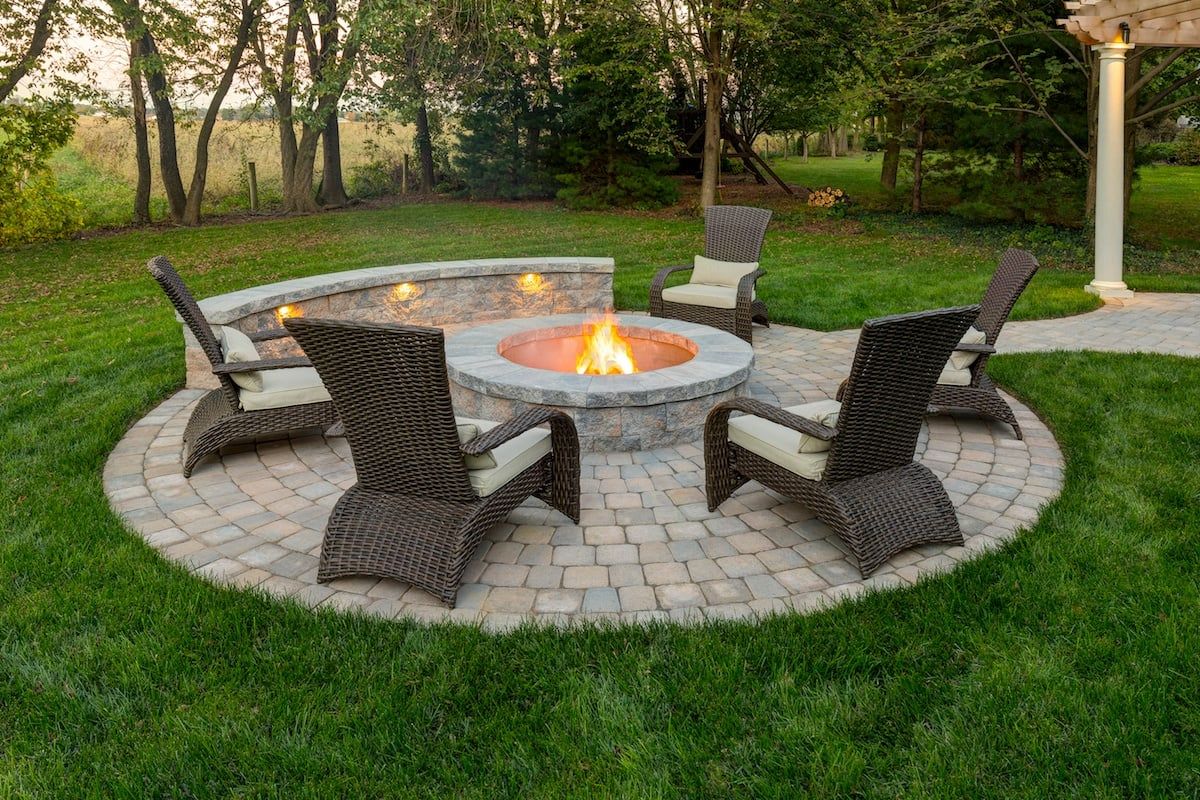
Fire Pit Installation Massachusetts | Designs, Costs & What to Know
How much does fire pit installation cost in Massachusetts? Built-in fire pit costs in Massachusetts range from $1,500–$4,000 for an above-grade stone or paver fire pit, $2,000–$5,000 for a sunken in-ground design, and $3,500–$8,000+ for a gas fire pit with supply line installation. A complete paver patio with fire pit and seating wall runs $12,000–$22,000. Gas fire pits are exempt from Massachusetts open burning restrictions and usable year-round — making them the practical choice for most homeowners. Horizon Deck and Patio designs and installs fire pit areas throughout Central Massachusetts.
Fire Pit Installation in Massachusetts: Designs, Costs, and What to Know Before You Build
A fire pit does not just add ambiance. In Massachusetts, where summer nights cool quickly and spring and fall shoulder seasons are genuinely enjoyable but unpredictable, a well-designed fire pit extends your outdoor living season by two to four months. It turns a yard into a gathering place. It is the reason guests stay through the evening rather than heading inside when the sun goes down.
At Horizon Deck and Patio, fire pit installations have become one of the most requested features on deck and patio projects across Lunenburg, Northborough, Westborough, Southborough, and Hopkinton. This guide covers everything Massachusetts homeowners need to know before building a fire pit: the types and designs available, realistic cost expectations, Massachusetts-specific regulations, and how a fire pit fits into a larger outdoor living space.
Types of Fire Pit Installations for Massachusetts Homes
In-Ground or Sunken Fire Pit
A sunken fire pit is recessed into the patio surface, creating a clean architectural look where the fire sits at or below the surrounding grade. Seating can be arranged right at the edge, and the lowered fire position creates a natural focal point without visual clutter above the patio surface.
Sunken fire pits work best on paver patio installations where the base is already being excavated. They are not suitable for wood or composite decks and pair most naturally with a full patio build where the fire pit is designed into the layout from the start.
Above-Grade Built-In Fire Pit
A raised, built-in fire pit is constructed on top of the patio surface using natural stone, brick, or concrete block and capped with a finished stone surround. Heights typically range from 12–24 inches, creating a defined focal point that is visible from the house and provides a comfortable fire height for seated guests.
Above-grade fire pits are one of the most popular features on combined deck-and-patio projects across Central Massachusetts. They pair particularly well with a natural stone or tumbled concrete paver surround and a low seating wall that creates a complete outdoor room around the fire.
Gas Fire Pit — Natural Gas or Propane
Gas fire pits offer significant convenience advantages over wood-burning alternatives. No wood storage. No smoke management. Instant on and off. Consistent flame height. No ash cleanup. Gas fire pits are also subject to fewer local burn restrictions than wood-burning units in many Massachusetts towns — meaning you can use a gas fire pit during open burning ban periods when wood-burning is prohibited.
Gas fire pits can be installed as built-in features in a paver patio with a gas line run from the house or a buried propane tank, or as freestanding units placed on the patio surface. The installation requires a licensed gas plumber for the supply line — a trade we coordinate with on combined projects.
Freestanding Fire Bowl or Fire Pit on a Patio
The most flexible and lowest-cost option. A high-quality cast iron or steel fire bowl placed on a paver patio surface requires no permanent installation, can be repositioned, and requires no permits. The trade-off is aesthetics — a freestanding unit does not have the architectural intentionality of a built-in feature and requires more ongoing management (storage, cover, ash disposal) than a built-in installation.
If you are working with a limited budget or want to experience how you actually use a fire feature before committing to a permanent installation, a quality freestanding unit on a well-designed patio is a reasonable starting point.
What Does Fire Pit Installation Cost in Massachusetts?
Costs vary widely depending on the type, materials, and whether the fire pit is part of a larger patio project or a standalone addition.
Freestanding fire bowl — product only, no installation: $200–$800. Above-grade built-in fire pit with natural stone or paver surround: $1,500–$4,000. Sunken in-ground fire pit integrated into a patio: $2,000–$5,000. Gas fire pit with supply line installation: $3,500–$8,000+. Full fire pit seating area including patio, fire pit, and surrounding seating wall: $8,000–$22,000+.
The most common project Horizon Deck and Patio installs is a combined paver patio with a built-in fire pit seating area — roughly 400–600 square feet of paver surface with a stone fire pit and a surrounding seating wall. These projects typically run $12,000–$22,000 depending on paver selection, stone type, and site conditions.
When a fire pit is added as part of a new patio installation rather than as a standalone project, the incremental cost is lower because base preparation, materials delivery, and crew mobilization are already part of the patio scope.
Massachusetts Fire Pit Regulations: What You Need to Know
Permit Requirements
Built-in permanent fire pits may require a building permit in some Massachusetts municipalities, particularly if they are large structures or involve gas lines. Gas fire pits with underground supply lines require a gas permit and a licensed gas plumber in Massachusetts — this is required by law and non-negotiable. Freestanding fire pits and fire bowls typically do not require permits as long as they comply with local fire safety regulations. Always confirm permit requirements with your local Building Department before starting a built-in fire pit project.
Massachusetts Fire Safety Regulations for Outdoor Fire Pits
The Massachusetts Department of Fire Services regulates outdoor burning, and several requirements apply directly to residential fire pits.
Setback from structures: outdoor fire pits should be a minimum of 10–25 feet from any structure, fence, or overhead obstruction. Local fire codes may set stricter minimums — check with your town's fire department.
Open burning restrictions: Massachusetts has seasonal burning restrictions and issues complete burning bans during dry conditions. Open burning bans are announced by the Massachusetts Department of Conservation and Recreation and may prohibit wood-burning fire pit use during high-risk periods. Gas fire pits are typically exempt from open burning restrictions and can be used year-round.
HOA Considerations
If your property is in a homeowner's association, check your HOA documents before planning a fire pit installation. Some HOAs restrict or prohibit open burning, and others require architectural review approval for permanent outdoor structures.
Designing a Fire Pit Area That Actually Gets Used
The difference between a fire pit that becomes the centerpiece of your outdoor life and one that sits neglected after the first season is almost always design — how the seating relates to the fire, how the whole space connects to the house, and how the materials hold up to New England's climate.
Getting the Seating Radius Right
The most common design mistake is placing seating too far from the fire. For a comfortable conversation circle, the ideal seating distance is 6–8 feet from the fire edge. This puts guests close enough to feel the warmth and maintain easy conversation without being too hot or too close for comfort. For a built-in seating wall, plan for the wall to sit roughly 6–7 feet from the fire pit edge. A wall height of 18–20 inches provides comfortable seating with or without cushions.
Materials That Perform in New England Winters
Not every fire pit material handles Massachusetts winters equally. Here are the best choices for built-in fire pit installations in Central Massachusetts:
Natural fieldstone — native to New England, weathers beautifully, excellent thermal mass for holding warmth, and a natural aesthetic that suits wooded Central Massachusetts properties particularly well.
Granite — extremely durable, resists thermal cracking better than most materials, available in finishes from rustic to refined. Granite is abundant across Central Massachusetts as both a regional material and a design preference.
Concrete pavers — the most versatile and cost-effective option for fire pit surrounds and seating walls. Cambridge Pavingstones, Unilock, and Belgard all manufacture products rated for thermal applications.
Materials to avoid: standard red brick (prone to spalling in freeze-thaw conditions), regular concrete block without proper capping, and any material not rated for fire and frost exposure.
Connecting the Fire Pit Area to the Rest of the Yard
The best fire pit areas feel like intentional destinations. Design considerations worth discussing with your contractor include a defined path connection from the deck or back door to the fire pit area — either stepping stones, a defined paver walkway, or a continuous patio surface. Low-voltage path lighting or uplighting around the fire pit area dramatically extends evening usability. And natural screening from neighboring properties through a planting bed, a low stone wall, or mature shrubs creates definition and privacy without making the space feel enclosed.
How a Fire Pit Fits Into a Combined Deck and Patio Project
For many of the homeowners we work with across Central Massachusetts, the ideal outdoor space is a deck off the house for dining and direct indoor-outdoor flow, plus a patio at grade with a fire pit for evening gathering. These two zones serve different functions and benefit from being separate but connected.
A typical combined project looks like this: an upper level 12×16 composite deck attached to the house, used for the dining table, grill area, and primary outdoor living. A lower level 16×20 paver patio at grade, centered on a built-in stone fire pit with a surrounding seating wall. Connected by stairs, the two zones give families a clear distinction between the primary outdoor living area and the fire pit gathering space — and the yard stays functional and open between and beyond both.
Frequently Asked Questions: Fire Pit Installation in Massachusetts
Can I use a fire pit on my composite deck?
Freestanding fire bowls can be used on composite decking with a fire-rated mat or pad placed underneath the unit and adequate clearance from the house. In-ground or built-in fire pit installations should not be placed directly into composite decking. For integrated fire pit designs, a paver patio with a built-in fire pit is the right solution.
Are gas fire pits worth the extra cost over wood-burning in Massachusetts?
For most Massachusetts homeowners, yes. Gas fire pits eliminate wood storage, smoke management, cleanup, and — critically — are not subject to Massachusetts open burning restrictions. The ability to use the fire pit year-round including during summer burning bans and dry spells makes gas a strong value proposition despite the higher upfront cost. If convenience and year-round usability are priorities, gas is the right choice.
How close to my house can a fire pit be in Massachusetts?
Massachusetts fire safety guidelines recommend a minimum of 10 feet from any structure, and many local fire departments recommend 25 feet. At Horizon Deck and Patio, we plan fire pit placement with proper safety clearances built into the design from the start — not as an afterthought.
Do I need to do anything special to maintain a built-in stone fire pit?
Built-in stone fire pits are very low maintenance. Covering the fire pit during extended non-use periods prevents moisture accumulation in the bowl. Inspect the surrounding stone or masonry each spring for any frost heaving or cracking — minor settling is normal in New England winters and is typically a straightforward repair. Keeping the bowl clear of ash and debris after each use extends the life of the materials significantly.
What is the best time of year to install a fire pit in Massachusetts?
Late spring through early fall is the ideal installation window. We can plan and design fire pit projects year-round, and permit submissions can happen in winter. The actual installation should avoid periods when the ground is frozen solid, so April through October is the practical construction season in Central Massachusetts. Starting the design conversation in late winter or early spring is the best way to have your fire pit ready for the first warm evenings of the season.
Ready to Design Your Outdoor Fire Pit Space?
At Horizon Deck and Patio, we design and build fire pit installations as part of complete outdoor living projects — from single paver patios with a built-in fire pit to full deck-and-patio combinations with seating walls, lighting, and gas fire features.
We serve homeowners in Lunenburg, Northborough, Westborough, Southborough, and Hopkinton, MA — and we would love to walk your yard and help you design the outdoor space you will actually use.
→ Deck vs. Patio: Which Is Right for Your Massachusetts Backyard?