Composite Decking Maintenance New England | Seasonal Guide
How do you maintain composite decking in New England? Composite decking requires two thorough cleanings per year — spring and fall. In spring, clear debris, clean with mild soap and a soft brush, and inspect for structural issues. In fall, clear leaves aggressively and remove rugs and furniture before winter. For snow removal, use only plastic shovels and calcium chloride ice melt — never metal tools or rock salt. Quality Trex and TimberTech composite decks last 25–40 years in New England's climate with this level of care.
How to Maintain Composite Decking in New England: A Seasonal Guide
One of the most appealing things about composite decking is how little maintenance it requires compared to wood. No annual staining. No sealing. No sanding. But low maintenance does not mean zero maintenance — and in New England's climate, knowing what to do each season keeps your composite deck looking its best for the full 25–40 year lifespan these products are designed to deliver.
Tyler Grams at Horizon Deck and Patio has installed Trex and TimberTech composite decking throughout Lunenburg, Northborough, Westborough, Southborough, and Hopkinton, MA. This guide covers exactly what composite deck maintenance looks like season by season in a New England climate — what to do, what to avoid, and what to watch for that signals a more serious issue worth addressing before it becomes expensive.
Why Composite Decking Still Needs Seasonal Attention in Massachusetts
Composite decking is engineered to be dramatically lower maintenance than wood — but New England puts outdoor structures through conditions that no decking material is completely immune to. Freeze-thaw cycling through Massachusetts winters. Heavy snow loads. UV exposure during long summer days. Pollen, mold spores, and organic debris accumulation in spring. Each season creates specific maintenance tasks that, done correctly and consistently, keep your composite deck performing and looking exactly as it should.
The good news: composite deck maintenance in New England takes a few hours per year, not a weekend per season. The tasks are simple, the products are inexpensive, and the payoff is a deck surface that looks fresh and performs correctly for decades. Here is what that looks like broken down by season.
Spring Maintenance — The Most Important Season for Composite Decks in New England
Spring is the highest-priority maintenance window for composite decking in Massachusetts — and the one most homeowners either do correctly or skip entirely. What you do in April and May sets up your deck's appearance and performance for the entire outdoor season.
Clear winter debris immediately
As snow melts and temperatures rise above freezing consistently, clear any remaining debris from the deck surface — leaves, twigs, dirt, and any organic material that has accumulated over winter. Organic debris sitting on composite decking is the primary cause of mold and mildew growth. Composite boards resist mold from beneath and within the board, but surface mold can develop on top of the board when organic material traps moisture against the surface for extended periods.
Clear debris from between boards as well. The gaps between composite boards are designed for drainage and airflow — blocked gaps trap moisture and slow drying after rain, which creates conditions for surface mold even on boards that are otherwise performing correctly.
Clean the surface thoroughly
Once debris is cleared, clean the entire deck surface with a solution of warm water and mild dish soap or a composite deck cleaner rated for your specific brand. For Trex decking, Trex's own cleaning products are formulated to work with the board's cap chemistry. For TimberTech, TimberTech recommends similar mild soap solutions for routine cleaning.
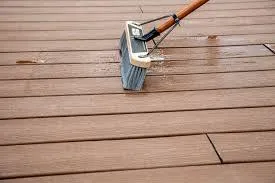
Apply the cleaning solution with a soft-bristle brush or a mop — not a stiff wire brush, which can scratch the board cap. Work along the length of the board rather than across the grain. Rinse thoroughly with a garden hose. For stubborn spots — bird droppings, food stains, or tree sap — allow the cleaning solution to sit on the stain for 5–10 minutes before scrubbing.
Pressure washing — what you need to know
Pressure washing is acceptable on most composite decking but requires the right technique to avoid damaging the board cap. Use a fan tip nozzle rather than a concentrated jet tip. Keep the pressure at or below 1,500 PSI. Hold the nozzle at least 8 inches from the board surface and move continuously — never hold the spray stationary in one spot. Always wash along the length of the board, not across it.
Pressure washing at too high a pressure or with a concentrated tip can etch the board surface and create micro-abrasions that accumulate dirt faster over time. When in doubt, a thorough scrub with soap and water and a garden hose rinse achieves most of what pressure washing does without the risk.
Inspect the structure while you are cleaning
Spring cleaning is the right time to inspect your deck's structural components. Walk the surface looking for soft spots, wobbly boards, or loose fasteners. Check the railing by applying lateral pressure — it should not flex. Look at the ledger board where the deck connects to the house and check for any gaps, staining, or signs of moisture intrusion. Inspect post bases at grade level for any darkening or deterioration.
If you find anything that concerns you — soft spots, structural movement, ledger issues — contact a professional before the outdoor season begins rather than after. Most structural issues are easier and less expensive to address early.
Summer Maintenance — Keeping Your Composite Deck Looking Its Best
Summer maintenance for composite decking in Massachusetts is minimal. The primary tasks are routine cleaning after heavy use and a few specific situations to be aware of.
Routine cleaning during the season
After outdoor entertaining, clean food and beverage spills promptly. Most composite decking is highly resistant to staining, but acidic substances — red wine, fruit juice, condiments — can leave marks if left sitting on the surface in direct sun for extended periods. A quick wipe or rinse after use prevents the vast majority of staining issues.
Sweep or blow off pollen during heavy pollen periods in May and June. Pollen accumulation combined with rain creates a paste-like residue on composite surfaces that is easy to remove when fresh but more stubborn once it dries through multiple wet-dry cycles. A quick rinse after heavy pollen periods prevents buildup.
Grilling on a composite deck
Grilling on a composite deck is common in Massachusetts and is fine with the right precautions. Use a grill mat or heat-resistant pad under the grill to protect the board surface from grease drips and radiant heat. Keep the grill positioned so that grease run-off goes onto the mat rather than directly onto the boards. Clean grease spills promptly — grease left on composite boards in summer heat can penetrate the cap layer over time and become more difficult to remove.
Avoid positioning the grill directly against the house wall or the deck railing. Adequate clearance from the house is a fire safety requirement regardless of deck material.
Furniture and foot traffic
Composite decking handles furniture and foot traffic well, but a few precautions protect the surface long-term. Use furniture pads or rubber feet under patio furniture legs — metal legs without protection can scratch the board cap over time. Move furniture periodically to allow the deck surface beneath it to dry evenly and receive consistent UV exposure, which prevents uneven fading patterns.
Composite boards in direct sun can get warm on hot summer days, particularly darker colors. This is a comfort consideration rather than a material concern — the boards are not being damaged by heat in normal Massachusetts summer conditions.
Fall Maintenance — Preparing Your Composite Deck for New England Winter
Fall is the second most important maintenance window for composite decks in Massachusetts. What you do in October and November directly affects how your deck comes through the winter.
Clear leaves aggressively and consistently
Leaf accumulation on a composite deck in fall is the single biggest maintenance issue Massachusetts homeowners face. Wet leaves sitting on composite boards for extended periods — particularly in shaded areas that dry slowly — create ideal conditions for surface mold and mildew. In areas beneath trees, this means clearing leaves multiple times through the fall rather than once at the end of the season.
Clear leaves from between boards as well. A leaf blower is the most efficient tool for this task and is safe to use on composite decking. Alternatively, a soft-bristle broom or plastic leaf rake works well without risk of scratching the surface.
Final fall cleaning before winter
Before temperatures drop consistently below freezing, do a thorough cleaning of the entire deck surface. Soap, water, soft-bristle brush, rinse. Clear all gaps between boards. Remove any potted plants, furniture cushions, outdoor rugs, or accessories that will trap moisture against the surface over winter. Outdoor rugs left on composite decking through a Massachusetts winter are one of the most reliable ways to end up with mold growth on the board surface in spring.
Check fasteners and railing before winter
Fall is a good time to check hidden fasteners for any that have worked loose over the season and to give the railing a firm lateral push to confirm it is solid. Address any loose components before winter — frozen fasteners and snow-loaded railing are harder to assess and repair than the same issues addressed in October.
Winter Maintenance — Snow and Ice on Composite Decking in Massachusetts
Massachusetts winters test outdoor structures more than any other season. The good news for composite deck owners is that winter maintenance is simpler than it is for wood — but there are specific right and wrong ways to handle snow and ice removal.
Snow removal — the right tools
Remove snow from your composite deck using a plastic shovel, a rubber-edged pusher, or a roof rake with a plastic blade. Never use a metal-edged shovel on composite decking. Metal edges can gouge the board cap, creating scratches that accumulate dirt and are difficult to clean. The damage is cosmetic rather than structural, but it is permanent and unnecessary.
Push snow in the direction of the board rather than across it. Leave a thin layer of snow on the deck rather than scraping to the board surface — the thin layer acts as a buffer between the shovel and the deck and the residual snow will melt naturally once temperatures allow.
Ice removal — what to use and what to avoid
Ice on composite decking is best addressed with calcium chloride or magnesium chloride ice melt products — both are safe for composite decking and for the pressure-treated wood substructure beneath. Avoid rock salt and sodium chloride products, which are corrosive to the metal fasteners and hardware in the deck system over time. Avoid sand, which scratches the board cap and gets packed into the gaps between boards.
Never use a metal ice chipper on composite decking. If ice has bonded to the surface, apply a composite-safe ice melt product, allow time for it to work, and remove the loosened ice with a plastic tool.
Snow load considerations
Massachusetts has meaningful ground snow loads — Central Massachusetts typically falls in a zone requiring outdoor structures to be designed for 35–40 pounds per square foot of snow load. A properly designed and permitted deck built to Massachusetts building code is engineered to handle this load without issue. If you have any concern about your deck's structural capacity — particularly on an older structure — have it assessed by a professional before a heavy snow season rather than after a problem develops.
Common Composite Decking Issues in New England and How to Address Them
Surface mold or mildew
Surface mold on composite decking appears as dark grey or black spotting and is almost always caused by organic material — leaves, pollen, dirt — trapped against the surface in a moist environment. It is a surface condition, not a structural one, and is straightforward to address. Clean the affected area with a composite deck cleaner formulated for mold removal, apply with a soft brush, allow to dwell for the manufacturer's recommended time, scrub, and rinse thoroughly. For persistent mold in shaded areas, a diluted solution of oxygen bleach — not chlorine bleach — applied and rinsed is effective and safe for most composite products. Check your specific brand's guidelines before applying any bleach product.
Fading or color inconsistency
Some color variation is normal in the first year of a composite deck's life as the boards weather to their stable color. Most high-quality composite products experience minimal fading after the initial weathering period due to their capped construction. If you notice significant uneven fading after the first year — particularly in patterns that correspond to furniture placement or areas with different sun exposure — contact your contractor. This may indicate a product issue covered under the manufacturer's warranty.
Scratches or gouges
Minor surface scratches on composite decking are usually cosmetic and not a structural concern. Deep gouges that penetrate the cap layer are more difficult to address — the cap cannot be refinished the way wood can be sanded. For significant damage, board replacement is the most effective solution. This is one of the reasons proper snow removal technique — no metal shovels — matters year after year.
Boards that feel soft or flex more than expected
Soft or excessively flexible composite boards typically indicate a substructure issue rather than a board issue. Composite boards themselves do not rot or soften the way wood does. If boards feel soft or spongy, the cause is almost always deterioration in the pressure-treated framing beneath them. Have a professional assess the substructure — this is a structural concern that should be addressed promptly.
When to Call a Professional
Most composite deck maintenance in Massachusetts is genuinely DIY-appropriate — cleaning, snow removal, minor inspections. Call a professional when you notice soft spots or structural movement in the deck surface, railing that fails the lateral push test, any signs of ledger board deterioration or separation from the house, post bases that show visible rot or deterioration, or fasteners that are backing out of the surface in multiple locations. These are structural signals that go beyond maintenance and require a professional assessment before they become larger and more expensive problems.
Frequently Asked Questions: Composite Deck Maintenance in Massachusetts
How often should I clean my composite deck in Massachusetts?
A thorough cleaning twice per year — spring and fall — is sufficient for most composite decks in Central Massachusetts. Spot cleaning after entertaining, prompt spill removal, and regular leaf clearing during fall are the additional tasks that keep the surface looking its best between deep cleans. This is dramatically less maintenance than a wood deck, which requires annual or biennial staining and sealing on top of routine cleaning.
Can I use a pressure washer on my Trex or TimberTech deck?
Yes, with the right technique. Use a fan tip nozzle, keep pressure at or below 1,500 PSI, hold the nozzle at least 8 inches from the surface, move continuously without stopping in one spot, and always wash along the length of the board. Wrong technique — concentrated jet tip, high pressure, or stationary nozzle — can damage the board cap permanently. When in doubt, soap, soft brush, and a garden hose rinse achieves excellent results without any risk.
What ice melt is safe to use on composite decking in Massachusetts?
Calcium chloride and magnesium chloride are safe for composite decking and the hardware underneath it. Avoid sodium chloride rock salt, which corrodes metal fasteners over time. Avoid sand, which scratches the board cap and packs into gaps. Never use a metal ice chipper on composite boards.
Does composite decking get mold in Massachusetts?
Surface mold can develop on composite decking in Massachusetts, particularly in shaded areas with poor drainage or in areas where organic debris — leaves, pollen, dirt — accumulates against the surface. It is a surface condition only, not a structural one, and is addressed with composite deck cleaner and a soft brush. The best prevention is regular leaf clearing, keeping gaps between boards clear, and removing outdoor rugs and furniture that trap moisture against the surface over winter.
How long does composite decking last in New England?
Quality composite decking from Trex or TimberTech lasts 25–40 years in New England's climate with basic seasonal maintenance. Both brands carry 25-year residential warranties, and TimberTech AZEK carries up to a 30-year fade and stain warranty on certain product lines. Properly maintained composite decks in Massachusetts routinely outlast the homes they are attached to — which is the strongest argument for the higher upfront cost compared to pressure-treated wood.
Ready to Build a Low-Maintenance Composite Deck in Central Massachusetts?
At Horizon Deck and Patio, we install Trex and TimberTech composite decking throughout Lunenburg, Northborough, Westborough, Southborough, and Hopkinton, MA. Every deck we build is properly permitted, professionally installed, and designed to perform in New England's climate for decades with exactly the seasonal maintenance described in this guide.
→ Composite Decking Installation Services
→ Deck Installation in Central Massachusetts
→ Trex vs. TimberTech: which is right for your Massachusetts home?