Why Massachusetts Outdoor Living Installations Need Drainage Before Fall
Why Drainage Matters Before Fall
Drainage needs to be part of the plan before fall because central Massachusetts freeze and thaw cycles can move water through patio bases and around deck footings all winter. Deck footings in this part of Massachusetts generally need to extend 48 inches below grade to get below the frost line. Without a compacted gravel patio base and a clear route for water, a patio can settle and shift within a few seasons.
For any outdoor living installation in MA, we look below the finished boards or pavers first. Rainwater needs somewhere to go, soil needs to handle it, and the deck or patio needs support that stays steady through snow, ice, and changing temperatures. Late August is a practical time to address these details before heavy fall rain and frozen ground make excavation harder.
Fall Rain Reveals Problems Below Ground
Fall rain is often the first real test for a yard. Water that pools near the house, under a deck, or along a patio edge has time to soak into the ground before temperatures drop. Once that water freezes, it expands and can push on footing areas, patio bases, and surrounding soil.
Before we plan a project, we encourage you to notice what happens after a hard rain. Pay attention to:
Standing water near the foundation or planned patio area
Muddy paths beside the house or beneath an existing deck
Downspouts that drain toward the new space
Low spots where snowmelt tends to collect
Older homes across Lunenburg, Littleton, Acton, Harvard, Groton, Fitchburg, Northborough, Southborough, Westborough, and Hopkinton often have established grades, mature trees, and additions that change how water moves. The goal is not to add work that does not belong. It is to protect the compacted base, framing connections, footing areas, and supporting soil that will be hard to reach later.
Deck Drainage Starts at the Footings
Deck drainage involves more than the gaps between deck boards. Water should move away from the house, avoid collecting around footings, and pass through or below the deck without leaving a wet, unstable area.
In central and north central Massachusetts, deck footings generally need to extend 48 inches below grade. That depth helps get below the frost line and reduces the risk of frost heave. Footings that are too shallow can move as frozen soil expands, leaving a deck uneven over time.
A clear deck installation plan should also account for framing, drainage, guardrails, and permits before construction begins. Under Massachusetts building code, decks more than 30 inches above grade require guardrails. Most towns in our service area also require a building permit for a new deck.
Material choice matters, but it cannot solve a water problem below the deck. Trex and TimberTech composite decking typically carry 25- to 50-year limited warranties, depending on the product line. Pressure treated lumber can be a good fit for a budget-conscious project, but it needs staining or sealing every two to three years. Both options still need sound framing and dry, stable support below.
Patio Bases Need Drainage and Compaction
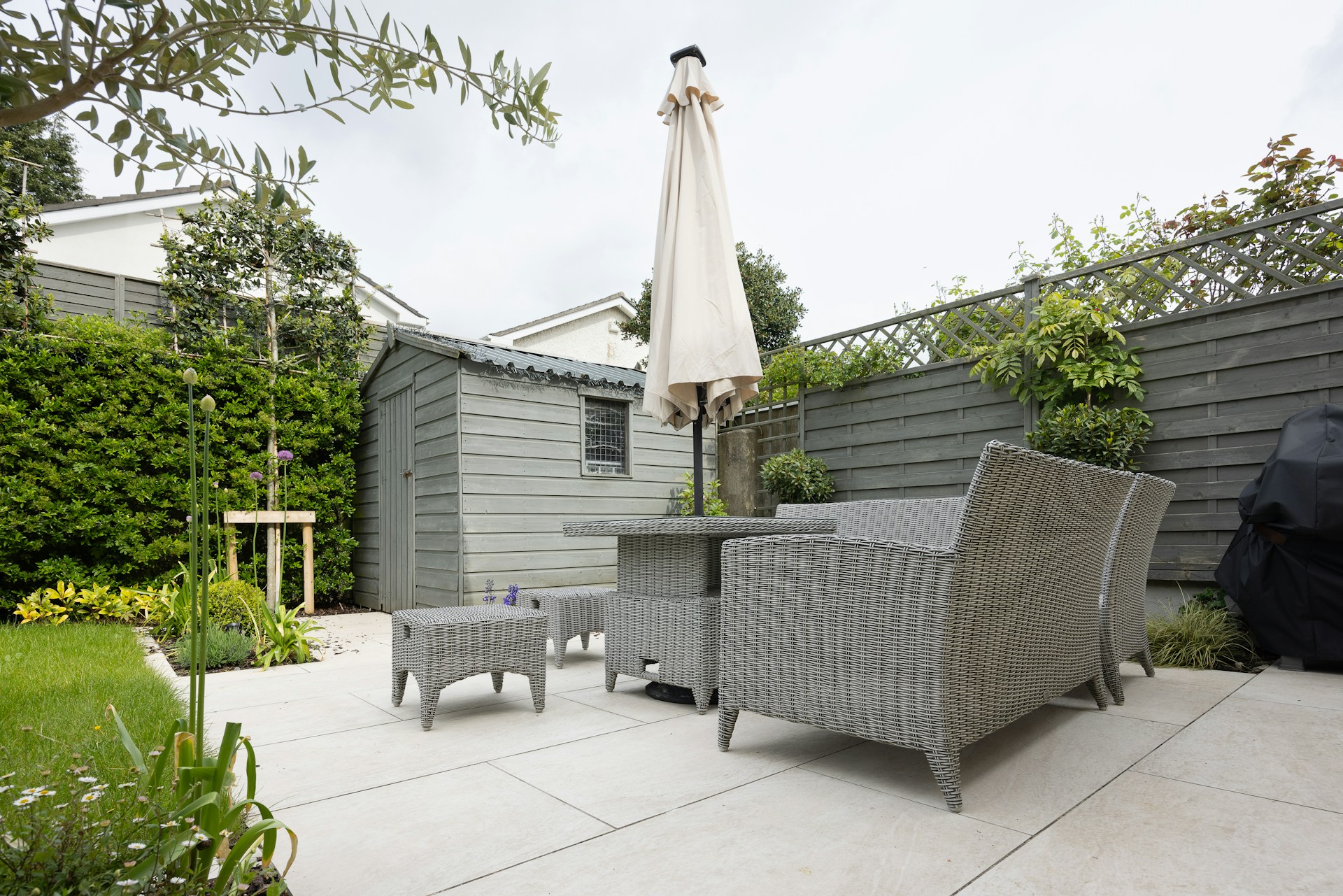
A paver patio depends on what sits underneath it. Concrete pavers and natural stone need excavation, a compacted gravel base, and drainage that lets water move away instead of collecting under the finished surface.
When base preparation is rushed, pavers can settle, edges can move, and low areas can hold water. Massachusetts freeze and thaw cycles make those issues worse. Water expands when it freezes, disturbing the base that supports the patio.
Snow removal adds another concern. Salt, snow piles, and spring melt can place extra moisture around patio edges and walk-off areas. During a patio installation, we consider where snow will be placed and where melting water will drain.
The best choice between a deck and patio comes down to the site and how you plan to use the space:
A patio often works well for ground-level seating and fire pit areas
A deck can make more sense where the yard slopes away from the house
An elevated door may call for a deck rather than a ground-level patio
Both options need drainage planned before the surface goes in
What a Detailed Quote Should Cover
Most deck and patio projects take one to three weeks, depending on size and scope. Starting the conversation before fall gives us time to plan the layout, materials, permitting, drainage, and construction schedule without rushing the work below grade.
A detailed proposal for an outdoor living installation in MA should explain the materials, project scope, drainage concerns, footing or base work, and expected timeline. A deck quote that skips footings, framing, permit work, guardrails, or drainage leaves major parts of the build unclear. A patio quote that lists pavers but says nothing about excavation, compacted gravel, or water management may not include the support the surface needs.
The lowest quote can leave out the work that protects the finished project. Before choosing a plan, ask where water will go after rain, how deep the footings will be, what supports the patio, and how permitting affects the schedule. Those answers matter as much as the board or paver you see on top.
Keep Water Moving Before Fall
Horizon Deck & Patio plans drainage with the base, framing, and finished surface so water has a clear path away from your new space. A well-planned outdoor living installation in MA helps protect pavers from freeze-thaw shifting and keeps the area usable after rain. We will walk through how you use the space and explain the prep it needs before work begins. Contact us to discuss your project or schedule a free estimate at (978) 382-0639.
FAQs
Can Drainage Wait Until Spring?
Waiting can delay a project and leaves water issues in place through another Massachusetts winter. Planning in late summer or early fall gives us time to assess the grade and prepare below-grade work before frozen ground limits excavation.
Do All Decks Need Footings Below The Frost Line?
Deck footings in this part of Massachusetts generally need to extend 48 inches below grade. That depth helps prevent frost heave, which can cause a deck to shift or become uneven over time.
Will Composite Decking Solve Moisture Problems?
Composite decking is a lower-maintenance surface option with limited warranties typically ranging from 25 to 50 years, depending on the product line. It does not replace proper drainage, sound framing, or correctly installed footings.
Does A New Deck Need A Permit?
Most towns in our service area require a building permit for a new deck. Decks more than 30 inches above grade also require guardrails under Massachusetts building code. Planning those details early helps keep drainage, footing depth, and the build schedule working together.