Screened Porches & Three-Season Rooms in MA | Horizon
Is a screened porch or a three-season room better for Massachusetts?
It depends on how many months you want to use the space. A screened porch keeps out bugs and light rain but has no heat or insulation, so it's ideal for spring through fall. A three-season room adds windows, insulation, and sometimes heat, extending usability into early spring and late fall. Massachusetts homeowners typically spend $15,000–$30,000 on a screened porch and $25,000–$50,000+ on a three-season room. Horizon Deck and Patio builds both across Lunenburg and MetroWest MA.
If you've ever cut a summer evening short because the mosquitoes showed up right as everyone sat down, you already know why screened porches are one of the most requested additions we build. Massachusetts backyards, especially the wooded lots common throughout Lunenburg, Harvard, and Groton, come with a real bug season that runs from late spring through early fall. An open deck or patio doesn't solve that. A screened structure does.
This guide breaks down the difference between a screened porch and a three-season room, what each one costs in Massachusetts, and how to decide which one fits your home.
Screened Porch vs. Three-Season Room: What's the Difference?
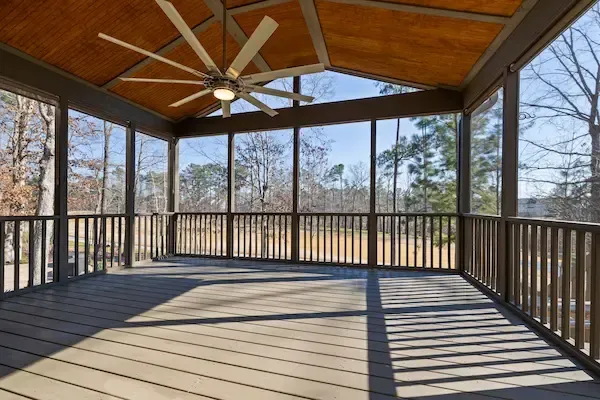
A screened porch is an outdoor structure enclosed with screening instead of glass or solid walls. It keeps out mosquitoes, ticks, and light rain while still feeling like a true outdoor space, with fresh air moving through. It's typically built as an addition to an existing deck or patio, or as part of a new build.
A three-season room goes a step further. Instead of screens, it uses windows, usually with screens built in as an option, along with insulated walls and a roof. Some three-season rooms include a space heater or ductless mini-split, which allows the room to stay comfortable from early spring through late fall, roughly March through November in Massachusetts, rather than just the peak summer months.
The tradeoff is straightforward. A screened porch feels more like true outdoor living and costs less. A three-season room extends your usable months further but costs more and functions more like an actual room addition than an outdoor structure.
Why Screened Structures Make Sense in Massachusetts
Bug season. Massachusetts summers bring heavy mosquito and tick activity, particularly on wooded lots throughout Lunenburg and Hopkinton. A screened porch solves this without sacrificing the feeling of being outside.
Unpredictable rain. New England gets frequent short bursts of rain rather than long dry stretches. A screened porch keeps you dry during a passing shower without needing to run inside.
Extending shoulder seasons. A three-season room in particular is built for the Massachusetts spring and fall, the months when it's too cool to sit on an open deck but still nice enough to want to be outside.
Protecting furniture and living space. Both structures protect outdoor furniture, rugs, and electronics from direct sun and weather exposure far better than an open deck or patio, extending the life of everything inside the space.
What Do Screened Porches and Three-Season Rooms Cost in Massachusetts?
Pricing depends on size, whether the structure is built on an existing deck or requires a new foundation, and how much insulation or climate control is included.
Screened porch, built on existing deck: $8,000 to $18,000. The most affordable option when the deck structure and roof are already in place and only screening and framing need to be added.
Screened porch, new structure: $15,000 to $30,000. Includes roofing, framing, and screening built from the ground up, typically as part of a broader deck and patio design project.
Three-season room, unheated: $20,000 to $35,000. Includes insulated walls and windows but no dedicated heat source.
Three-season room, with heat or mini-split: $30,000 to $50,000+. The most usable option for Massachusetts, extending the space well into fall and reopening it earlier in spring.
These figures reflect materials and labor only. Electrical work, ceiling fans, and finished flooring will move a project toward the higher end of these ranges. Every Horizon Deck and Patio estimate is detailed and provided free before any work begins.
Permits and Planning Considerations
Both screened porches and three-season rooms typically require a building permit in Massachusetts, since they involve roofing, framing, and in some cases electrical work. Requirements vary by town. For a full breakdown of the permit process across our service area, see our guide on deck permits in Massachusetts.
A few other factors worth thinking through before you build:
Existing deck condition. If you're converting an existing deck into a screened porch, the deck's structure needs to support a roof load, which isn't always the case with older builds. This is worth having evaluated before committing to a design.
Foundation requirements. A three-season room built as a new structure, rather than converting an existing deck, may require its own foundation, which adds cost and time to the project.
Snow load. Any roofed structure in Massachusetts needs to be engineered to handle New England snow accumulation, which affects framing requirements for both screened porches and three-season rooms.
Which One Is Right for Your Backyard?
If your main goal is keeping bugs and light rain out during the months you'd already be outside anyway, a screened porch is usually the better value. If you want to genuinely extend your outdoor season into early spring and late fall, and you're comfortable with a bigger investment, a three-season room delivers more usable months per dollar over time.
Many homeowners start with a screened porch over an existing deck and consider a three-season room conversion later. Our deck and patio remodel team can evaluate whether your current deck is a good candidate for either option.
Frequently Asked Questions
What's the difference between a three-season room and a four-season room?
A three-season room has insulated walls and windows but typically no dedicated heating or cooling system, making it comfortable from early spring through late fall. A four-season room is fully insulated and climate-controlled, allowing year-round use similar to any other room in the house, and generally costs significantly more to build.
Can I convert my existing deck into a screened porch?
Yes, in many cases. Converting an existing deck into a screened porch is one of the more affordable ways to add the feature, since the deck structure and sometimes the roof are already in place. The deck needs to be evaluated first to confirm it can support the added roof and screening framework.
Do screened porches keep out mosquitoes and ticks?
Yes. A properly installed screened porch with tight seams and a secure door creates an effective barrier against mosquitoes, ticks, and other flying or crawling insects, while still allowing airflow through the space.
Does a screened porch or three-season room require a permit in Massachusetts?
In most Massachusetts towns, yes. Both structures typically involve roofing and framing work that requires a building permit, and three-season rooms with electrical or heating components may require additional permits. Requirements vary by municipality, so it's worth confirming with your local building department.
Ready to Bug-Proof Your Backyard?
Whether you want a simple screened porch built onto your current deck or a fully insulated three-season room, Horizon Deck and Patio can help you design a space that fits how you actually want to use your backyard in Lunenburg, Northborough, Southborough, Westborough, and Hopkinton. Contact us today for a free estimate and design consultation.
Get a FREE Estimate — (978) 382-0639