Paver Patio vs Natural Stone Patio
Paver patio or natural stone — which is better for a Massachusetts home? Concrete pavers are the better choice for most Massachusetts homeowners — lower cost at $8,000–$14,000 for a standard installation, exceptional freeze-thaw durability, and individual pavers can be replaced without disturbing the rest of the surface. Natural stone — bluestone and granite are the strongest choices for New England — delivers an organic, one-of-a-kind aesthetic that suits traditional and colonial homes particularly well but runs $14,000–$22,000+ for equivalent square footage. Horizon Deck and Patio installs both throughout Lunenburg, Northborough, Westborough, Southborough, and Hopkinton, MA.
Paver Patio vs Natural Stone Patio — Which is Right for Your Massachusetts Home?
When Massachusetts homeowners start planning a new patio, one of the most common decisions they face is choosing between concrete pavers and natural stone. Both are excellent materials that hold up well to New England's demanding climate, but they differ significantly in appearance, cost, maintenance requirements, and design flexibility. In this guide, the team at Horizon Deck and Patio breaks down everything you need to know to make the right choice for your home in Lunenburg, Northborough, Southborough, Westborough, or Hopkinton, MA.
What is a Paver Patio?
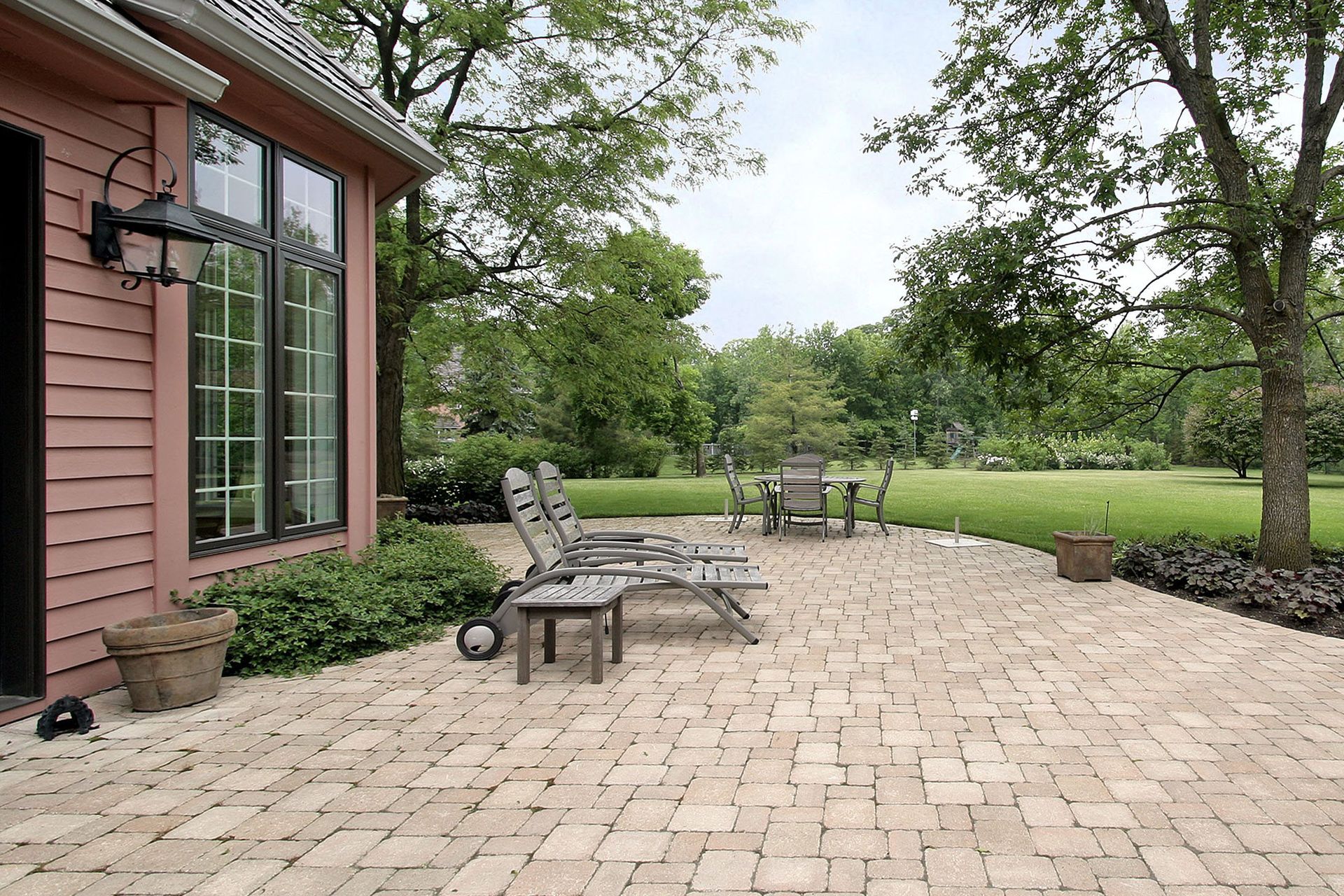
A paver patio is built using manufactured concrete or brick pavers, individual units that come in a wide range of shapes, sizes, colors, and patterns and are installed over a properly prepared compacted gravel and sand base. Concrete pavers are one of the most popular patio choices for Massachusetts homeowners because they offer an excellent combination of durability, design flexibility, and value. They are engineered to precise dimensions, which makes installation more predictable and the finished surface clean and consistent in appearance.
What is a Natural Stone Patio?
A natural stone patio is built using materials that are quarried directly from the earth, including bluestone, flagstone, slate, granite, and limestone. Each piece of natural stone is unique in color, texture, and shape, which gives natural stone patios an organic, one-of-a-kind appearance that manufactured materials simply cannot replicate. Natural stone has been used in outdoor construction for centuries and is prized for its timeless beauty, exceptional durability, and the premium character it adds to any outdoor space.
Paver Patio vs Natural Stone — The Key Differences
Appearance
This is perhaps the most significant difference between the two materials and ultimately comes down to personal preference and the aesthetic you are trying to achieve for your outdoor space. Concrete pavers deliver a clean, uniform, and highly customizable look. With hundreds of colors, shapes, and laying patterns available, pavers offer tremendous design flexibility and can be arranged to create everything from classic herringbone and running bond patterns to more elaborate custom designs.
Natural stone delivers a warmth, depth, and organic character that is in a category of its own. The natural variation in color, texture, and shape of materials like bluestone and flagstone gives every natural stone patio a completely unique, artisan quality that many homeowners find irresistible. For homes with a traditional, colonial, or rustic aesthetic — all very common architectural styles across Lunenburg and MetroWest MA — natural stone patios are an especially beautiful and complementary choice.
Durability in New England's Climate
Both concrete pavers and natural stone are excellent choices for Massachusetts's climate, but they perform slightly differently under the stress of repeated freeze-thaw cycles, heavy snow loads, and the moisture that comes with New England's wet springs and summers.
Concrete pavers are engineered specifically to handle freeze-thaw conditions and are highly resistant to cracking and shifting when properly installed over a well-prepared base. Individual damaged pavers can be easily replaced without disturbing the surrounding installation, which is a significant practical advantage over poured concrete surfaces.
Natural stone is inherently durable and has been used in outdoor applications for centuries, including in the harsh climates of New England. That said, some natural stone varieties are more porous than others and can be more susceptible to moisture absorption and surface weathering over time. Choosing the right stone variety for the Massachusetts climate — bluestone and granite are among the most durable options — and ensuring proper sealing when recommended are important factors in maximizing the longevity of a natural stone patio.
Cost
Concrete pavers generally cost less per square foot than natural stone, making them the more budget-accessible option for most Massachusetts homeowners. The consistent dimensions of manufactured pavers also make installation somewhat more straightforward, which can contribute to lower labor costs compared to natural stone installation.
Natural stone commands a premium price both for the material itself and for the skilled labor required to cut, fit, and install irregular stone pieces properly. The additional investment in natural stone is reflected in the truly distinctive finished product it delivers, a patio that looks and feels genuinely unique and adds exceptional curb appeal and value to your home.
Concrete paver patios in Lunenburg and the surrounding Central Massachusetts area typically run $8,000–$14,000 installed for a standard 400 square foot project. Natural stone patios — bluestone, granite, and flagstone — run $14,000–$22,000 or more for equivalent square footage due to material cost and the additional skilled labor required to cut, fit, and set irregular stone correctly. Adding a built-in fire pit and seating wall adds $3,000–$8,000 to either project type. Every Horizon Deck and Patio estimate is free, written, and itemized — no vague ranges and no surprises after work begins.
Maintenance
Both concrete pavers and natural stone require relatively low maintenance compared to wood decking, but there are some differences worth understanding. Concrete pavers are generally quite low maintenance — periodic cleaning, resealing of joint sand as needed, and occasional individual paver replacement are the primary maintenance tasks. Some paver products benefit from periodic sealing to protect against staining and enhance color retention.
Natural stone maintenance requirements vary depending on the specific stone selected. Some natural stone varieties benefit from periodic sealing to protect against moisture absorption and surface staining. Flagstone patios with irregular joints filled with polymeric sand or ground cover plants may require occasional attention to joint maintenance. Overall, a well-installed natural stone patio with the right material selection is a low-maintenance, long-lasting outdoor surface.
Design Flexibility
Concrete pavers offer exceptional design flexibility due to the wide range of colors, shapes, and patterns available. From simple running bond and herringbone patterns to elaborate custom designs incorporating multiple colors and shapes, pavers give homeowners and designers tremendous creative freedom within a consistent, predictable material format.
Natural stone offers a different kind of design flexibility, one rooted in the organic variation of the material itself. Irregular flagstone patios have a wonderfully natural, flowing quality that fits beautifully into landscaped settings and traditional New England home styles. Cut natural stone can also be used in more formal, geometric layouts that combine the beauty of natural material with a clean, structured appearance.
Which is Right for Your Massachusetts Home?
The right choice between a paver patio and a natural stone patio depends on your budget, aesthetic preferences, and the overall style of your home and landscape. If you are looking for maximum design flexibility, excellent durability, and strong value for your investment, a concrete paver patio is an outstanding choice for your Lunenburg or MetroWest MA home. If you want an organic, timeless beauty and a truly one-of-a-kind outdoor living space that adds exceptional character and premium curb appeal to your property, a natural stone patio is worth every penny of the additional investment.
At Horizon Deck and Patio, we install both concrete paver patios and natural stone patios for homeowners across Lunenburg, Northborough, Southborough, Westborough, and Hopkinton, MA. During your free design consultation, we will walk you through both options with real examples, help you understand the cost differences for your specific project, and guide you toward the material that best fits your vision, budget, and lifestyle. Contact us today to schedule your free estimate and let's start designing the perfect patio for your home.
Frequently Asked Questions: Paver Patio vs. Natural Stone in Massachusetts
Is natural stone or concrete pavers better for Massachusetts winters?
Both perform excellently in New England's freeze-thaw climate when properly installed over a well-prepared gravel base. Concrete pavers are engineered specifically for freeze-thaw resistance and have a slight practical edge because individual pavers can be replaced if they ever shift or crack. For natural stone, bluestone and granite are the strongest choices for Massachusetts — both handle temperature extremes well and resist surface weathering better than more porous stone varieties like limestone or slate.
How long does a paver patio last in New England?
A properly installed concrete paver patio in Massachusetts typically lasts 25–50 years with minimal maintenance. The key to longevity is the base preparation underneath the surface — a properly compacted gravel base at adequate depth prevents the heaving and shifting that poorly installed patios develop after the first winter. Natural stone patios installed correctly last equally long, often becoming more characterful with age rather than degrading.
Do paver patios require permits in Massachusetts?
In most Massachusetts towns, standard ground-level paver and natural stone patios do not require a building permit. Patios that include permanent structures — a covered pergola, electrical, or a built-in gas fire pit with a buried supply line — typically do require permits. Horizon Deck and Patio confirms permit requirements for every project before starting work and manages any required applications on your behalf.
Can I add a fire pit to a paver or natural stone patio?
Yes — and it is one of the most popular additions we design and build across Central Massachusetts. Built-in fire pits integrate naturally into both paver and natural stone patio designs and are one of the best investments for extending your outdoor season in Massachusetts. Natural stone fire pit surrounds — particularly granite and fieldstone — pair especially well with natural stone patios and create a cohesive, intentional outdoor aesthetic. We design the fire pit as part of the overall patio layout from the start rather than as an afterthought.
Which patio material adds more value to a Massachusetts home?
Both add meaningful value. Natural stone patios command a slight premium at resale in higher price range markets like Southborough and Northborough because buyers in the $700,000+ range recognize the material quality and the craftsmanship required to install it correctly. Concrete paver patios deliver strong value across all price ranges and are the most practical choice for most homeowners balancing investment against return. A well-designed patio of either material with a built-in fire pit consistently outperforms a plain patio at resale in Central Massachusetts's market.